

Hydroxybenzomorpholine (CAS 26021-57-8, INCI HYDROXYBENZOMORPHOLINE) is a benzoxazine phenol used in oxidative hair-color formulas as a meta-coupler — the molecule that reacts with an oxidized primary intermediate inside the hair shaft to form the indo-dye chromophore. EU Cosmetic Regulation 1223/2009 Annex III, Entry 230 caps it at 1.0% applied to hair after mixing, with a 50 µg/kg nitrosamine ceiling and a nitrite-free container requirement.
The previous generation of product literature framed this molecule as a “color stabilizer,” which is mechanistically loose. Anyone who’s actually scaled a permanent-color formula knows it is not a stabilizer at all: it is a reactive partner for the primary intermediate, and the chromophore it helps build is what stays in the cortex.
Identity at a Glance
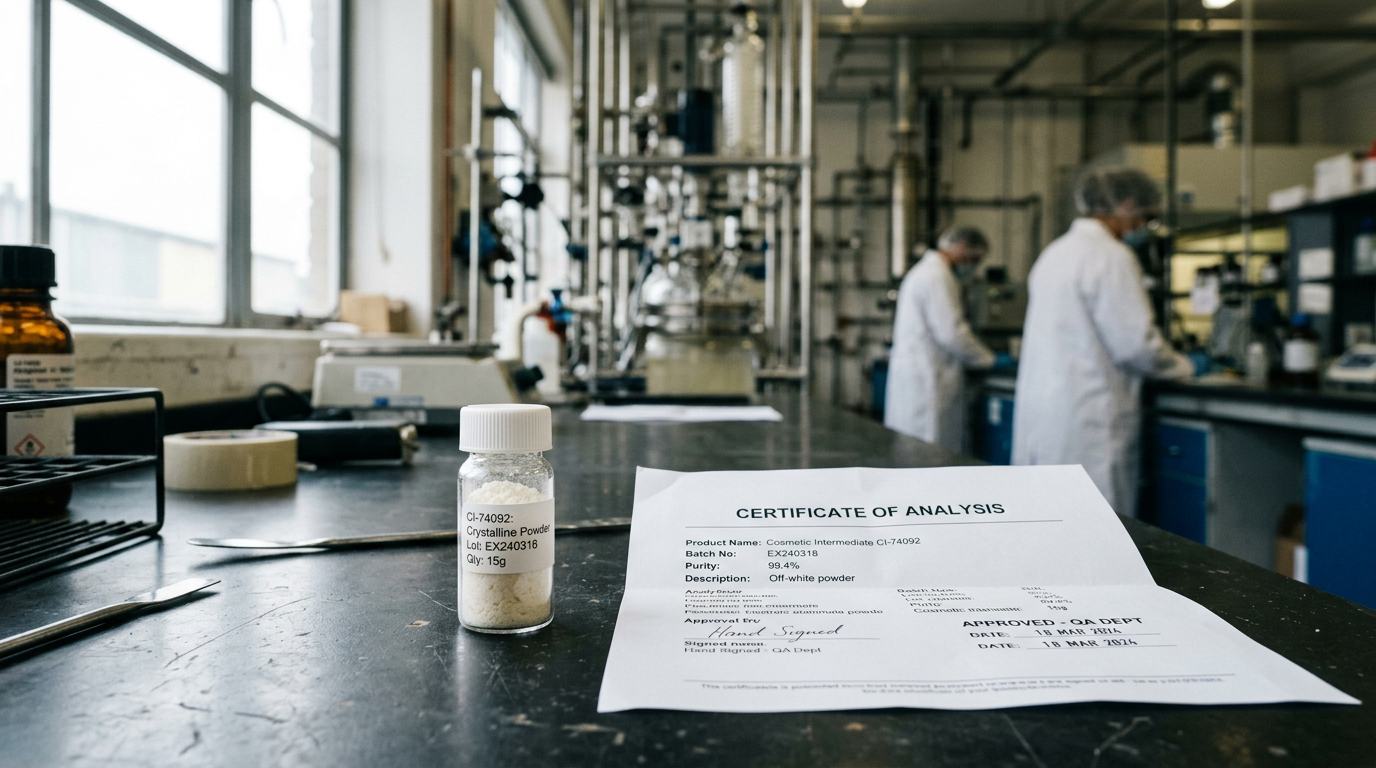
The molecule appears under several identifiers in suppliers’ COAs and regulatory databases. The table below is the set worth keeping on a single sourcing card.
| Field | Value |
|---|---|
| INCI name | HYDROXYBENZOMORPHOLINE |
| CAS number | 26021-57-8 |
| EC number | 247-415-5 |
| IUPAC (CAS-authoritative) | 3,4-dihydro-2H-1,4-benzoxazin-6-ol |
| Molecular formula | C₈H₉NO₂ |
| Molecular weight | 151.16 g/mol |
| PubChem CID | 117709 |
| Density | 1.241 g/cm³ |
| Boiling point | 334.7 °C at 760 mmHg |
| Typical commercial purity | 95% |
| Common synonyms | HBM, 6-hydroxybenzomorpholine |
One naming oddity is worth flagging up front. The CosIng inventory lists this molecule as “2,3-dihydro-2H-1,4-benzoxazin-6-ol” while CAS Common Chemistry, PubChem, and the COAs you will see from established producers use the IUPAC-correct “3,4-dihydro-” form.
Both refer to the same structure — position 1 is the ring oxygen — but copying the CosIng locants verbatim into a spec sheet creates a COA-vs-spec mismatch that audit will flag. Use the 3,4- form.
How It Actually Works as a Meta-Coupler
Hydroxybenzomorpholine does not react with hydrogen peroxide directly. It reacts with the oxidized form of a primary intermediate — typically para-phenylenediamine (PPD), para-toluenediamine (PTD), or 2,5-diaminotoluene (2,5-DAT) — inside the hair cortex during alkaline mixing. That distinction is what the INCI tag flattens, and it is the reason the function label “hair dye” is misleading on a sourcing brief.
Per the Lewis, Mama and Hawkes review at Perachem (2017), the sequence runs in two oxidation steps:
- The primary intermediate (PPD in the canonical scheme) is oxidized by H₂O₂ in alkaline pH to a quinonediimine (QDI).
- The QDI reacts with the meta-coupler — HBM, resorcinol, or m-aminophenol — to give a colorless leuco dye, which oxidizes again to lock in the indo-dye chromophore trapped inside the cortex.
When the primary intermediate is sterically hindered (PTD is the usual culprit), meta-couplers stop at dimers; otherwise the chromophore polymer extends to trimers. That steric step explains why a PPD/HBM pair and a PTD/HBM pair give visibly different shade depths even at the same mole ratio.
The shade range, per supplier-reported pairing data, runs natural brown through warm chestnut when HBM pairs with PPD, m-aminophenol, or resorcinol-family primaries. Treat that window as orientation, not benchmark — actual Lab values depend on the full coupler set, not the HBM dose alone.

Annex III Status and the Nitrosamine Sourcing Discipline
The operative regulation is Commission Regulation (EU) 2013/344 amending Annex III of 1223/2009, Entry 230. The COA needs to specify four things, all derived from the same root cause:
- Maximum 1.0% on-head concentration after mixing with developer (oxidative scalp products only)
- “Do not use with nitrosating agents”
- Maximum nitrosamine content 50 µg/kg
- Storage in nitrite-free containers
The 50 µg/kg ceiling is not arbitrary, and the nitrite-free container clause is not a parallel requirement — they are the same requirement seen from two ends. The morpholine ring nitrogen in HBM is a secondary amine, and secondary amines plus nitrosating contaminants generate N-nitroso compounds, which the Perachem review describes as “among the most potent carcinogens known.”
The mechanism is also where this gets unintuitive. Nitrosation by atmospheric NO_x can occur in neutral or alkaline conditions, not only acidic, so the risk window is not confined to the 30-minute application step. Nitrite-free packaging plus a 50 µg/kg analytical ceiling on the hydroxybenzomorpholine sourcing spec close the loop on both ends — incoming material clean, container chemistry clean, finished mix clean.
The earlier 1993 SCCNFP opinion (COLIPA #A25) and SCCP reaffirmation set the 2.0% in-formulation / 1.0% in-use limits and required the standard hair-colourant sensitization warning on the label. That 1993 dossier is the regulatory backbone, but the operative spec for a 2026 formulator is the current Annex III text.
Where It Sits Next to Resorcinol Couplers
The reason HBM keeps appearing on shortlists is that resorcinol — the historical workhorse meta-coupler — is under sustained EU pressure. Commission Regulation (EU) 2022/2195 (November 2022) restricts resorcinol to 1–2% in oxidative scalp dyes, prohibits eyebrow and eyelash applications, and mandates allergy warnings; the rule has been in force since 1 July 2023 for products placed on the market and 1 January 2024 for products made available. The SCCS file driving the change cited skin sensitization, eye irritation, and suspected endocrine effects.
Brand-side, the “PPD-free, resorcinol-free” professional positioning (O&M CØR.color and similar 2026 launches) has turned resorcinol substitution from a regulatory hedge into a marketing-led reformulation pipeline. For the regulatory and formulation context behind that substitution, our companion piece on avoiding resorcinol in hair dye covers the timing and shade-shift implications in more depth.
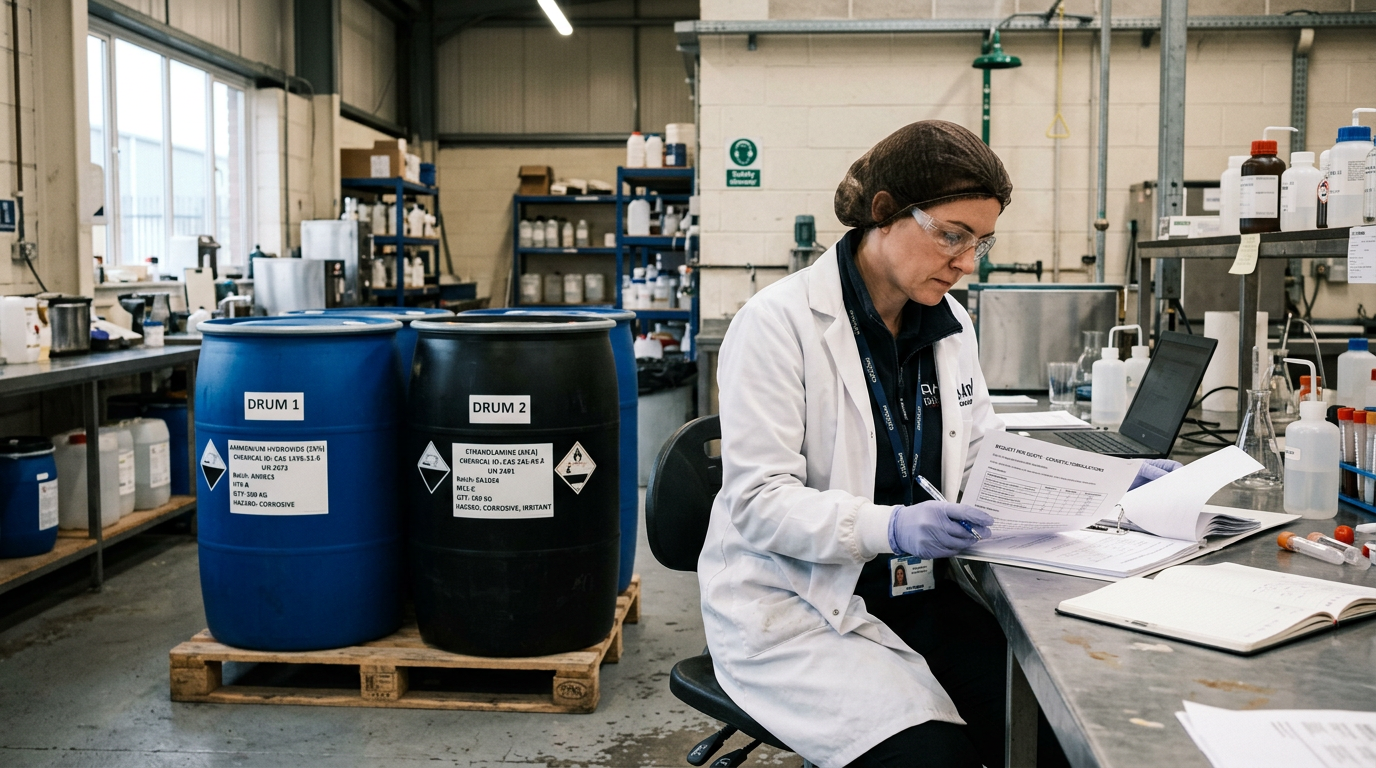
Hydroxybenzomorpholine is one of the candidates a formulator considers in that pipeline — but it is not a drop-in replacement. Resorcinol’s shade contribution sits in the green-yellow envelope; HBM pairs into the natural-brown to warm-chestnut window. On the RFQ, the spec to scrutinize is purity (95% is the common commercial grade; tighter is available), the nitrosamine ceiling, and container metal-passivation history.
What This Means in Practice
The mistake worth avoiding is treating hydroxybenzomorpholine as a “stabilizer” or a generic skin-care active. It is neither — it is the reactive meta-coupler that joins an oxidized primary intermediate to lock the chromophore into the hair shaft. Almost every operational decision on the bench and on the COA traces back to two facts: HBM pairs with PPD, PTD, or 2,5-DAT under alkaline H₂O₂, and its morpholine ring is a secondary amine.
Specify the IUPAC 3,4- form on internal documents (not the CosIng 2,3-), require the 50 µg/kg nitrosamine number and nitrite-free packaging on every lot, and keep the resorcinol substitution conversation grounded in shade math rather than label optics. The molecule earns its place on a 2026 formulator’s shortlist by chemistry, not by marketing.